Student recruitment has changed. Educational institutes once relied on campus fairs, word-of-mouth, and local reputation. Digital marketing is now essential. Schools skipping data-driven recruitment lose students to competitors who don’t.
This guide covers the main challenges in recruitment today, how digital marketing changes what’s possible, and concrete steps institutions can take to compete.
The New Challenges in Student Recruitment
Global Competition and Changing Demographics
Recruiting students is no longer a local affair. Institutes now compete globally, with students applying to multiple colleges across borders.
Add declining birth rates, shifting student interests, and more non-traditional learners (working adults returning to school), and competition intensifies.
Declining Enrollment and the “Enrollment Cliff”
Many regions are experiencing a drop in high school graduates, leading to fewer college applicants, a phenomenon known as the “enrollment cliff.”
Projections show a peak in 2025, followed by a significant decline in the coming years, forcing institutions to rethink their student enrollment marketing and diversify their recruitment strategies.
Privacy and Data Access Restrictions
New privacy laws and the shift to digital standardized testing have reduced access to student data. Colleges that once relied on standardized test providers for recruitment now face a “search cliff,” with up to 40% fewer student names available for outreach. This makes it harder to identify and connect with qualified prospects using old methods.
Rising Student Expectations
Modern students want personalized communication, flexible options, and instant information access. Institutes must deliver this while managing tight budgets.
Why Data-Driven Marketing in Education Matters
Better Targeting and Personalization
You can understand what prospective students actually want by tracking their website visits, social media behavior, and content clicks. Then send them messages tailored to their interests instead of broadcasting the same pitch to everyone.
Increased Efficiency and Measurable Results
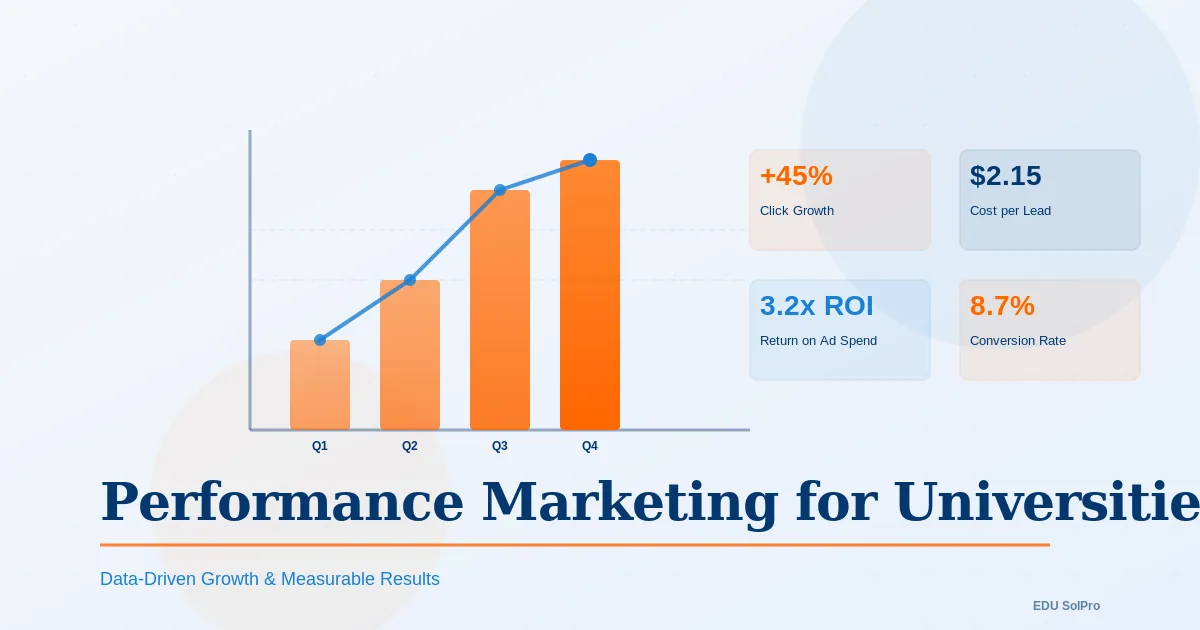
You know exactly which campaigns work. Track conversions, kill what’s not working, and double down on what is. That focus beats traditional marketing on time and budget.
Proactive Decision-Making
You can spot trends early—which programs are getting interest, which applicants are likely to enroll, where you’re about to have a gap. That means you can adjust your outreach in time.
Key Tools and Methods in Data-Driven Student Recruitment
Analytics Platforms
CRMs, ERPs, and marketing dashboards help institutions organize and interpret recruitment data. They track everything from initial inquiry to enrollment. Examples:
-
CRM Systems (like HubSpot): Store contact data, track interactions, and automate personalized communications.
-
Marketing Automation: Nurture leads with targeted emails, content, and calls-to-action based on user behavior.
-
Social Media Dashboards: Measure engagement, identify top-performing content, and optimize posting schedules.
Segmentation and Personalization
Segmentation divides prospective students by demographics, interests, or behaviors. Then send each segment relevant content—program recommendations to engineering prospects, event invites to nearby students.
Retargeting and Predictive Modeling
Retargeting re-engages prospects who’ve shown interest but haven’t applied. Predictive models identify who’s likely to enroll, so recruiters focus on high-probability prospects.
How Digital Marketing for Educational Institutions Drives Results
The Power of SEO
When students search for programs, show up in results. A solid SEO strategy means you’re found without paying for every click.
Top rankings build credibility. Organic search costs nothing after setup—paid ads stop the moment your budget ends. Speed, navigation, and clear information all affect conversion rates.
Social Media Engagement
Students live on Instagram, Snapchat, and Facebook. Show actual campus life, not stock photos. Real testimonials and day-to-day moments build trust. Answer questions quickly—response speed matters on social.
Video Content and Mobile Optimization
Video tours and student interviews work. So does making sure everything loads fast on phones—most students browse on mobile.
Lead Generation and Nurturing
Effective student enrollment marketing hinges on generating and nurturing qualified leads. Data-driven lead generation services use targeted ads, landing pages, and automated follow-up to guide prospects from interest to application. Learn more about comprehensive lead generation strategies.
Actionable Insights for Education Marketing Strategies
1. Embrace Personalization
Use data to segment your audience and deliver personalized content. Tailored emails, program recommendations, and event invitations increase engagement and application rates.
2. Track and Optimize Every Campaign
Implement analytics at every stage of the recruitment funnel. Monitor which channels and messages drive the most conversions, and adjust your strategies accordingly.
3. Invest in SEO and Content Marketing
Create valuable, informative content that answers prospective students’ questions. Optimize your website for relevant keywords and ensure a seamless user experience across devices.
4. Leverage Social Media for Community Building
Showcase campus life, highlight student achievements, and encourage user-generated content. Social media is a powerful tool for building trust and attracting students online.
5. Use Automation to Nurture Leads
Automated email sequences, chatbots, and CRM workflows keep prospects engaged throughout the decision-making process, increasing the likelihood of enrollment.
The Benefits of Data-Driven Student Enrollment Marketing
-
Higher Quality Leads: You attract genuinely interested students, not just volume.
-
Better Conversions: Personalized messages move prospects through the funnel faster.
-
Lower Costs: Digital campaigns are cheaper and easier to measure than campus fairs and print ads.
-
Stronger Community: Social media builds real connection and loyalty.
-
Real Data: You know what works and adjust in real time.
Taking the Next Step: Partnering for Success
The digital landscape is complex. Many institutions find specialized partners essential for implementing data-driven recruitment at scale. Understanding how to increase student enrollment through digital strategy helps you evaluate what partner capabilities you actually need.
Conclusion
Student recruitment is shifting to data, digital engagement, and personalization. Institutions that meet students online—where they search and spend time—win. See how digital marketing budgeting helps allocate resources effectively.
WhatsApp and CRM: Where Indian University Recruitment Actually Converts
WhatsApp dominates Indian student recruitment in a way most Western universities don’t fully appreciate. Parents and students both use it as their primary communication channel, not email. An enquiry submitted on your website at 2 PM means nothing if the first contact doesn’t happen until tomorrow morning. By then, the prospect has already checked three competing institutes. WhatsApp Business offers dedicated tools for scaling your recruitment communication effectively.
The difference between broadcasting cold lists and nurturing warm enquiries is stark. Cold WhatsApp campaigns annoy people who didn’t ask to hear from you. CRM-connected WhatsApp sequences build on genuine interest. A prospect submits their details on your site. Within 5 minutes, they receive a welcome message with program links, fee details, and next steps on the platform they’re already using.
A simple 3-step WhatsApp nurture sequence works consistently. First, send an acknowledgment and program overview. Second, your counsellor follows up within 24 hours to answer specific questions and remind them of application deadlines. Third, send an application reminder 5 days before the deadline for late-stage prospects. Repeated across hundreds of prospects during peak season, this sequence creates a steady flow of applications.
Peak admission season, October through March, puts your admissions team under strain. Prospects fall through the cracks. A qualified lead gets routed to WhatsApp but no one responds for three days. By then, they’ve applied elsewhere. CRM integration prevents this. Every enquiry feeds into an automated sequence. If the lead reaches a certain engagement threshold, a human counsellor gets notified immediately. No gaps, no forgotten prospects.
Marketing automation for universities handles this at scale. You don’t need to manually text 500 enquiries. The system does it, tracks responses, and flags high-intent leads for immediate human follow-up. Universities that implement this see application conversion rates jump by 40-60% compared to manual, ad-hoc approaches.
How to Measure Student Recruitment Success: The Metrics That Actually Matter
Most Indian universities track enquiry volume and call it success. They celebrate 500 new enquiries in a month, then wonder why only 40 converted to applications. The missing piece is measurement rigor.
Four metrics drive real decisions. Cost Per Lead (CPL) tells you how much you spent to get each enquiry. Cost Per Application (CPA) tells you how much each actual application costs across all channels. Application-to-Enrolment Rate reveals which programs convert browsers into students. Channel Attribution shows which source brought in the enrolled student, not just the initial click.
Tracking only enquiries without funnel attribution wastes your budget. You’ll keep funding the channel that generates the most enquiries, even if those enquiries never convert. Meanwhile, a lower-volume channel might be converting at twice the rate. Without channel attribution, you can’t see this gap. Next year’s budget gets allocated on volume, not evidence.
Here’s the trap: A prospect finds you through Google search, gets nurtured via WhatsApp, then gets called by a counsellor who doesn’t record the source. The enrolment gets attributed to “counselling,” not search. So search looks less effective than it is. Your budget shifts away from search. Performance drops.
Use these metrics to guide budget decisions. If CPL on Instagram is half your Google cost but CPA is 3x higher, shift budget away from Instagram. If one program has a 35% application-to-enrolment rate and another has 12%, find out why. Redirect recruiting spend toward the higher-converting program.
Related Resources
Explore more from EDU SolPro to strengthen your institution’s digital marketing:
- Lead Generation for Universities
- Google and Meta Ads for Universities
- SEO for Universities
- The Complete Guide to Digital Marketing for Universities
- Digital Marketing Budget Guide
Need expert help with your university’s digital marketing? Contact EDU SolPro for a free strategy consultation.