Most Indian universities treat their university admissions marketing calendar like they’re planning a month-long sale at a retail store. They start in May, run everything simultaneously, and wonder why their cost per inquiry is ₹2,500 in June but ₹8,000 by July. The problem isn’t your budget. The problem is timing.
Parents and students begin researching universities 6-12 months before applications open, according to admissions research. But most universities start thinking about marketing in January, then scramble for faculty videos and alumni testimonials when applications go live. By then, early decision-makers have already chosen competitors.
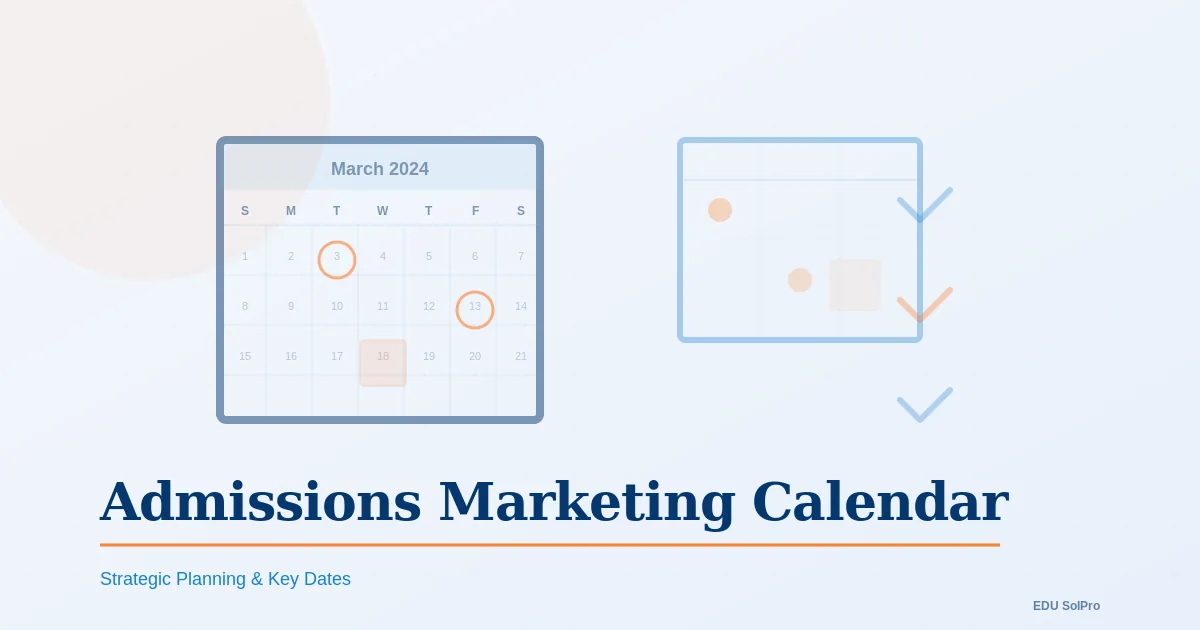
This calendar gives you a month-by-month playbook for the July-August intake (India’s main academic cycle). It’s built on what actually works: awareness building months before applications open, strategic inquiry campaigns when intent is high, and aggressive retention messaging after enrollment. You’ll waste less budget running the wrong channels at the wrong time.
October and November: Build brand awareness and start content production
October is when smart universities start moving. Students haven’t applied anywhere yet, so competition for attention is lower than it will be in January. This is your moment to own generic awareness keywords before the inbox becomes chaos.
What to run:
- YouTube awareness campaigns targeting “top engineering colleges in India” or “best BBA universities near [city]”. Gen Z students spend 2+ hours daily on YouTube; this is where they first hear about colleges. Use 6-12 second bumper ads, not 30-second pre-rolls that get skipped.
- Google Display campaigns retargeting anyone who has visited your admissions page. Most visitors leave without converting. Remind them you exist for the next 60 days.
- Blog and content publication on topics like “What’s the difference between NAAC accreditation and NIRF ranking?” or “How to choose between engineering specializations.” These establish authority and drive organic search traffic before the paid chaos begins.
- WhatsApp Business campaigns for your existing database of school partners, alumni, and past inquiry leads. Nurture sequences here cost almost nothing and have open rates above 90%.
This month should feel quiet. You’re not chasing leads aggressively. You’re staking territory and building credibility for the chaos that comes in December. Think of it as the foundation your performance marketing campaigns will stand on in January.
December and January: Launch inquiry generation campaigns
December is when the intent arrives. Searches for “engineering colleges admission” and “BBA college fees Pune” spike sharply. This is the start of lead generation season, and if you’re not ready, you’ll lose qualified students to competitors who moved in October.
What to run:
- Search campaigns with highly specific keywords. “BBA college Ahmedabad” gets more qualified traffic than “best college India.” Structure campaigns by program (BBA, Engineering, Commerce) and region (city-level). Use the Target CPA bidding strategy if you have at least 15-20 conversions per month.
- Performance Max campaigns to capture demand across search, YouTube, Gmail, and Discover. These work best when you have clear conversion data from previous years.
- School outreach campaigns: Partner with class 11-12 boards and coaching centers for co-marketing. Run WhatsApp broadcasts to school counselors, not students directly. Schools have decision-making power and lower acquisition costs than individual students.
- Tier 2 and Tier 3 city targeting with regional language ads (Hindi, Marathi, Tamil, Telugu). National brands capture Tier 1. You win Tier 2-3 with languages your competitors ignore.
Content to create:
- Program-specific landing pages with fees, placement records, and application timelines. Generic pages that link to your homepage lose 80% of visitors.
- Student testimonial videos: 60-second clips of current students talking about real things (hostel life, placements, campus food) beats polished brand videos.
- Detailed fee breakdowns and scholarship eligibility explainers. Transparency wins here.
February and March: Nurture leads and drive applications
You’ve built a list of inquiries. Now your job is preventing lead decay. Nearly 40-50% of qualified leads are lost simply due to neglect and slow follow-up. Most universities don’t have systems in place to nurture students while they evaluate options.
What to run:
- Email nurturing sequences: Set up 5-7 automated emails that go out over 30 days. Subject lines like “Your [Program Name] application checklist” or “Why we have 92% on-campus placements” convert better than generic “Complete your application” copy.
- WhatsApp drip campaigns for warm leads. More personal than email, faster response rates. One message every 3-4 days, not daily spam.
- Remarketing campaigns targeting anyone who visited your admissions page but didn’t apply. A single display impression isn’t enough. They need 3-5 touchpoints before converting.
- Open house and campus tour promotion: Run dedicated campaigns around your admission event. Location-based YouTube ads for students within 50km of campus. Instagram Stories for younger decision-makers.
Measurement focus:
- Email open rates (target: 25-35% for education)
- WhatsApp read rates (typically 80%+)
- Time from inquiry to application (should be under 15 days for hot leads)
- Cost per application (divide total spend by number of applications submitted)
This is your conversion phase. You’re not acquiring new leads here, you’re converting the ones you’ve already built. Marketing automation is what makes this phase scalable — email sequences, WhatsApp drips, and retargeting running simultaneously without manual effort from your admissions team. For a deeper look at how to build these sequences, read our guide on marketing automation for universities.
April and May: Drive final applications and enrollment commitments
Applications are open. This is peak campaign season and the most expensive time to acquire new leads. Focus on converting what you have rather than building new demand.
What to run:
- Countdown campaigns: “50 days until applications close” messaging works. Creates urgency. Use this angle on all channels.
- Last-chance search ads: Bid aggressively on high-intent keywords like “engineering college admission deadline [month].” CPC will be high, but conversion rates are best now.
- Proof-based messaging: Program-specific placement records, NIRF rankings (if you have them), fee transparency. This is not the moment for vague brand messaging.
- Student success stories: Case studies of graduates who got jobs at ₹12-15 LPA. Tie specific outcomes to your program.
- Reduce friction on application: One-click apply if possible. Pre-fill name and email for returning visitors.
June and July: Capture last-minute applicants and prevent melt
Applications are closing or closed, but not every student has committed. This window is where you prevent offers from turning into declined admissions.
What to run:
- Waitlist and spot-offer campaigns: Run dedicated campaigns for these micro-audiences. Lower budget, highly targeted messaging.
- Scholarship and financial aid campaigns: Many students decline because of cost, not lack of interest. Show financial aid options prominently here.
- Retention and prevention messaging: Use email and WhatsApp heavily. “Congratulations on your acceptance. Here’s what happens next.” Keep them engaged until they officially enroll.
- Pause new acquisition: Stop burning budget acquiring leads when most seats are spoken for.
Budget allocation:
- Retention email and WhatsApp campaigns: 50%
- Waitlist-specific ads: 30%
- Scholarship promotion: 15%
- Organic followup: 5%
Focus here is cost per enrolled student, not cost per application.
August: Transition to enrolled student engagement
Admissions season is over. Your job now is preventing enrollment melt. Students who have committed can still withdraw.
What to run:
- Pre-arrival communications: Welcome videos, hostel information, what to bring, registration deadline. Automated email sequence.
- Student community building: WhatsApp group for incoming batches. Faculty introductions. Virtual campus tours for parents. This costs almost nothing and dramatically improves show-up rates.
- Sibling and referral campaigns: Run targeted ads to friends of admitted students. They’re in the same school, same circles, same intent. Zero cold acquisition cost.
This is your final conversion point. A student who feels welcomed on August 1st is far more likely to show up on August 20th than one who hears nothing after receiving an acceptance letter.
Key implementation points
Use a CRM by September. Don’t manage leads in spreadsheets or email folders. Tools like Zoho CRM, HubSpot, or Salesforce allow automated nurturing, segmentation by program/source, and measurable follow-up time. Implement by September so you’re ready for the October-November push.
Track cost per stage, not just cost per lead. Most universities obsess over cost per inquiry. What matters is cost per qualified application, cost per accepted student, and cost per enrolled student. A ₹300 inquiry that converts to a ₹50,000 annual tuition payment is far more valuable than a ₹100 inquiry that never applies.
Lock your content calendar in April. Shoot all faculty and campus videos between June and September. Get approval by October. November should be execution, not creation. Universities that scramble for testimonials in January look desperate and behind.
Invest differently by city tier. Tier 1 cities (Delhi, Mumbai, Bangalore) are expensive and saturated. Your Google Ads CPC will be ₹40-60 per click. Tier 2 and Tier 3 cities (Pune, Jaipur, Lucknow) have CPCs of ₹15-30 and less competition. Allocate 40% of budget to Tier 2-3 if your program is geographically flexible.
Don’t ignore WhatsApp. Most universities spend 80% of budget on Google Ads and Facebook. But WhatsApp has 95% open rates and costs a tenth of email. A single WhatsApp message to your inquiry list every 4 days beats sporadic email blasts.
Key Takeaways
For a deeper look at executing each phase of this calendar, read our complete guide to digital marketing for universities. If your enquiry-to-application drop-off is the problem rather than enquiry volume, the issue is usually in your education lead generation and nurturing process. And if you’re timing campaigns around NIRF rankings, read our guide on how to improve your NIRF ranking — the announcement cycle maps directly onto the awareness phase of this calendar.
Ready to build a real marketing calendar for your next intake? Let’s discuss your lead generation strategy. We help Indian universities eliminate wasted budget by running the right campaigns at the right time.