A student at a private university in Surat posted a 47-second Instagram Reel of her morning routine: hostel room, breakfast, lecture hall, a quick library clip. No production. Phone camera. Shot in one morning.
The Reel got 1.8 lakh views. The university’s DMs received over 300 inquiries in four days. The university’s own Instagram page — managed by the communications team with professional photography and designed templates — had 4,200 followers and averaged 180 views per Reel.
The same pattern plays out across Indian university admissions. The universities paying attention are filling seats faster and at lower cost than those still running only traditional campaigns.
Why Student Creator Content Outperforms Official University Content
It comes down to trust.
Prospective students are not naive about advertising. They grew up with sponsored content, influencer disclosures, and algorithmic feeds. They know what a university is trying to do when it posts a polished campus video with drone shots and an inspirational soundtrack. They might enjoy it. They don’t believe it.
What they trust is a face they can identify with, speaking in normal language, about a normal day. A real hostel room. A real canteen queue. An honest moment about how hard the first semester was.
When a student in Jodhpur watches a Reel from a first-year student at a university in Ahmedabad and sees their actual wardrobe, actual roommates, actual food, the psychological distance between “that university far away” and “a place where someone like me could live” collapses. That’s what drives the inquiry.
What “Student Creator” Means in the Indian Context
The term covers a range of very different approaches, and the approach matters enormously for the outcome.
The organic student creator is a current student who has built their own audience on Instagram or YouTube, talking about their college life without any formal relationship with the university. These creators are the most trusted and the hardest to work with. The moment the relationship becomes formal, the authenticity that made them valuable starts to erode.
Student ambassadors are students officially designated by the university to create content on its behalf, given content briefs, sometimes a stipend or equipment, and expected to post regularly. Done well, these programmes produce consistent content at scale. Done poorly — overly scripted, rigid brand guidelines, approval chains — they produce content that looks exactly like official university content, just shot by a student.
Micro-influencers are education-focused creators on Instagram, YouTube Shorts, or Snapchat who cover multiple universities and reach prospective students in specific geographies. These are paid partnerships, managed more like an ad buy than a community programme.
The most effective university creator programmes combine all three, with the balance depending on the institution’s goals and content maturity.
Three Formats That Are Actually Driving Admissions in India
Format 1: Day-in-the-life and campus reality content
This is the highest-trust format. A current student documents a real day: morning routine, classes, food, free time, studying. No script. Minimal editing. The university appears incidentally, not as the subject.
What makes it work for admissions is specificity. The hostel room with the specific fan, the specific canteen food, the specific library layout — these details are what prospective students and parents use to mentally simulate “could I live here?” The more specific and unpolished, the more credible it reads.
Universities that have tried to script this format — providing students with talking points, requiring specific mentions of the university’s rankings or NAAC grade — have consistently found that it underperforms. The audience for this content is exceptionally good at detecting when authenticity has been managed.
Format 2: Placement and career outcome stories
The second-highest-converting format is placement stories told by students themselves. Not the “Average Package ₹X LPA” graphic on the website. A student sitting in front of their laptop explaining where they got placed, what the interview process was actually like, what they wish they’d known.
This format works because placement outcome is the primary anxiety of most prospective students and their parents in India. Official placement data is widely disbelieved. A student speaking directly to camera about their actual offer is believed in a way that no statistic is.
For this to work, the student needs genuine creative control over how they tell the story. A placement story that sounds rehearsed or that follows an obvious script loses all conversion value immediately.
Format 3: Admission process walkthroughs
The third format is practical and consistently underestimated. A student walking through the admission process from personal experience: how to fill the form, what happens at the counselling session, what documents are needed, what the first week looks like.
This content reduces the friction and anxiety associated with applying to an unfamiliar institution. A student from a small town in Rajasthan who is considering a university in Ahmedabad for the first time has a hundred practical questions that no brochure addresses. A creator video that walks through the actual experience answers those questions in a format they trust.
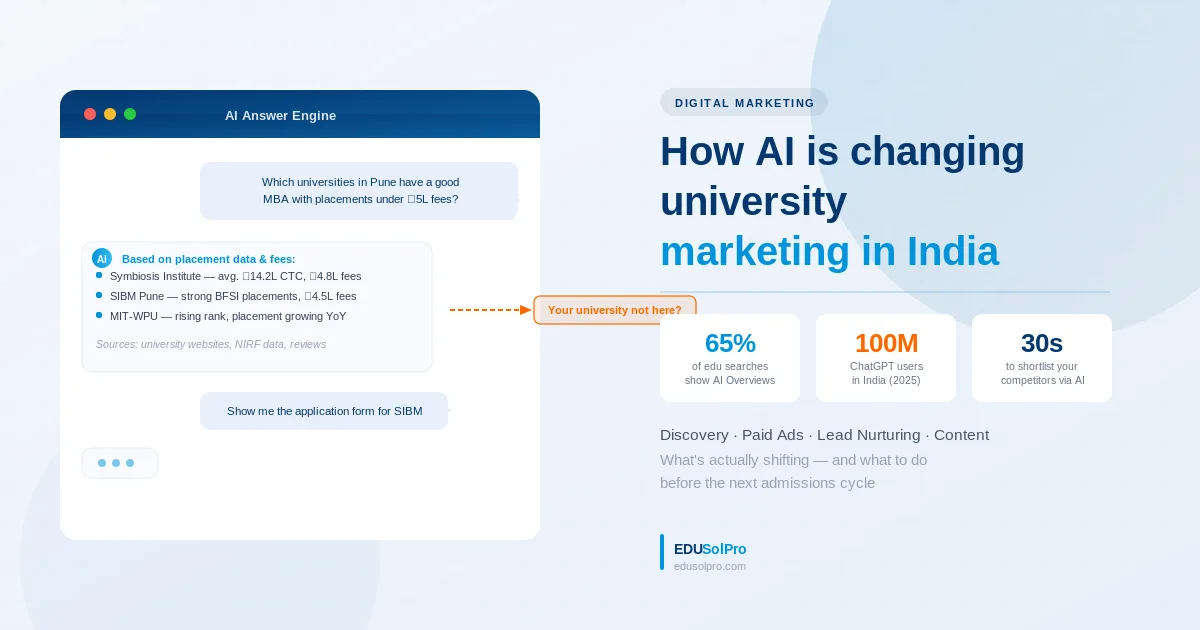
This format also tends to rank well in search results and AI-generated answers, giving it longer shelf life than trend-driven content.
The Platforms That Work for This in India
Instagram Reels is the primary platform for student creator content targeting the 17–22 age group. Discovery is strong: content from unfollowed accounts reaches prospective students through the algorithm when engagement is high. Regional reach comes through creator selection rather than paid targeting.
YouTube serves two distinct purposes. Shorts behave similarly to Reels for discovery. Long-form videos — 8 to 20-minute campus tours or “my university experience” style content — serve students who have already shortlisted the institution and want more depth. Search intent is strong: “XYZ University review” and “life at XYZ University” are actively searched.
Snapchat reaches a slightly younger demographic and works particularly well for UG admissions targeting class 12 students. We’ve covered Snapchat’s specific role in UG admissions in India separately.
LinkedIn is where placement stories perform best. The professional context lends credibility to career outcome content, and alumni posting about their experience tagged to the university reaches both prospective students and parents who use the platform actively.
How to Structure a Student Creator Programme
Regardless of scale, the programmes that work follow a similar structure.
Step 1: Identify the right students, not the most popular ones. The instinct is to find the student with the most followers. The better criterion is the student who is most honest, most comfortable on camera, and most representative of the student experience your target audience is aspiring to. A student with 2,000 followers who speaks authentically to their exact peer group is often more valuable than a student with 20,000 followers producing polished content.
Step 2: Give a brief, not a script. The brief tells the creator the topic, the approximate length, the platform, and one or two things the university would like included if they come up naturally. It does not prescribe what to say, in what order, or what tone to use. The moment you’re scripting the content, you’ve produced official content with a student face. The audience will know.
Step 3: Set up a review process, not an approval process. The difference matters. A review checks for factual errors and compliance issues. An approval process filters out anything imperfect and destroys the authenticity in the process. Universities that require every piece of content to be approved before posting end up with content that sounds like a press release.
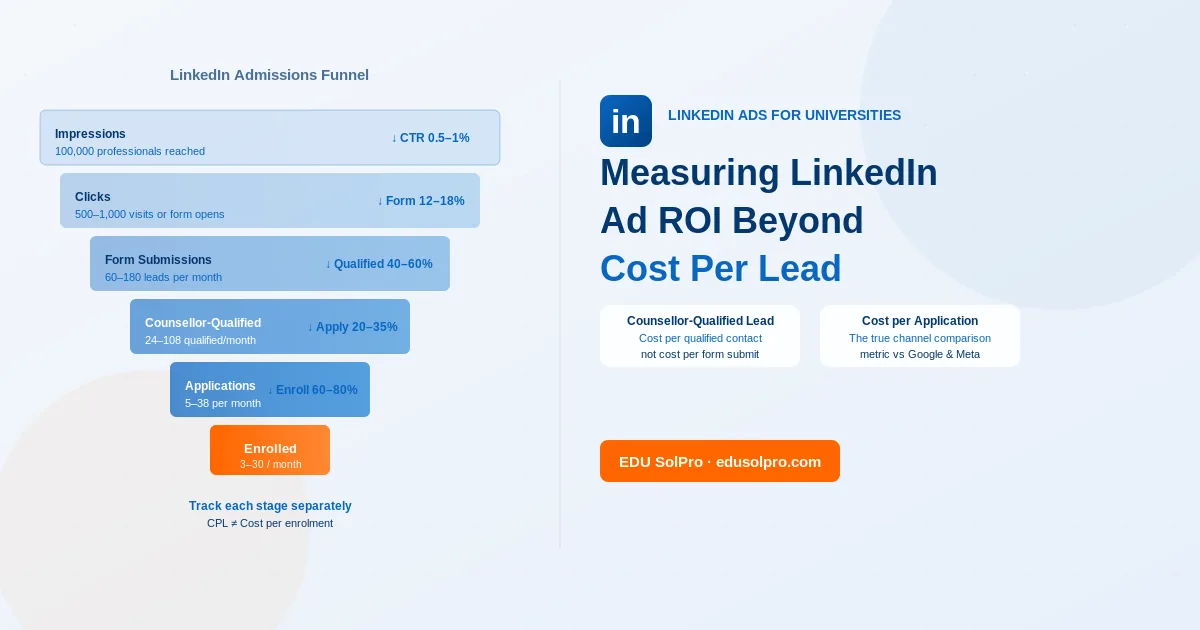
Step 4: Measure what actually matters. Engagement rate and reach are indicators. The metrics that connect to admissions outcomes are: DM inquiries attributed to creator content, campus visit requests that reference specific videos, and form submissions from students who cite social media as their first point of contact.
What Makes It Go Wrong
Most underperforming creator programmes fail for one of three reasons.
Wrong creators. A student who is photogenic and enthusiastic but doesn’t genuinely represent the core student experience creates content that reads as advertising, not testimony. The creator needs to be believable as a typical student.
Wrong platform for the target audience. A university targeting rural Rajasthan applicants running Instagram Reels in English is solving the wrong problem. Regional language content on the platforms where that specific student demographic spends time — which varies significantly by state and urban/rural classification — outperforms English-language polished content by a significant margin for those audiences.
Wrong incentives. Stipend structures that pay per post incentivize volume over quality. The better structure is a modest base (or recognition, not cash) with additional support for content that genuinely performs — equipment access, editing support, spotlight on the university’s main channels. The creators who do this well are usually motivated by the creative opportunity and the audience, not the payment.
Building a Programme That Scales
Starting a student creator programme doesn’t require a large budget. A pilot with 3–5 current students, a simple brief framework, and a 90-day run to evaluate what resonates with prospective students is a sufficient starting point.
What scales the programme is identifying which formats, creators, and platforms drive the most inquiry and application activity, then investing in those while cutting the ones that generate engagement without conversion.
For universities that want to move faster or build a more structured programme from the start, our Influencer Marketing service for universities covers creator identification, brief development, content review, and campaign measurement built specifically for Indian higher education.
For the broader student recruitment picture — how creator content sits alongside paid media, SEO, and direct marketing — our guide on student recruitment strategies using digital marketing covers the full channel mix.
University brand and creator content are closely linked: the brand positioning we covered in why students choose university brands, not universities is what gives student creator content its direction and coherence. Without clear brand positioning, creators don’t know what story they’re helping to tell.
Frequently Asked Questions
How many student creators does a university need to start? Three to five is sufficient for a meaningful pilot. You need enough variation in creator profile, programme, and content style to identify what resonates with your target audience. Starting with more than eight or ten creators before the brief and review process is tested typically produces inconsistent quality and difficult management.
Do universities need to pay student creators? A small stipend or equivalent benefit (equipment access, exclusive events access, LinkedIn recommendation from leadership) is reasonable and reduces attrition. The amount matters less than the recognition — students who are named as official campus creators and given a genuine platform often continue for the intrinsic value of the opportunity. Pure monetary arrangements without community recognition produce more transactional content.
How do we handle negative content from student creators? This is the question every university asks and the answer is counterintuitive: some negative content — a creator being honest about a difficult first semester, a complaint about a specific facility followed by how it was resolved — actually increases trust significantly. The instinct to remove or suppress honest negative content backfires. The review process should only flag genuinely false or harmful content, not honest criticism.
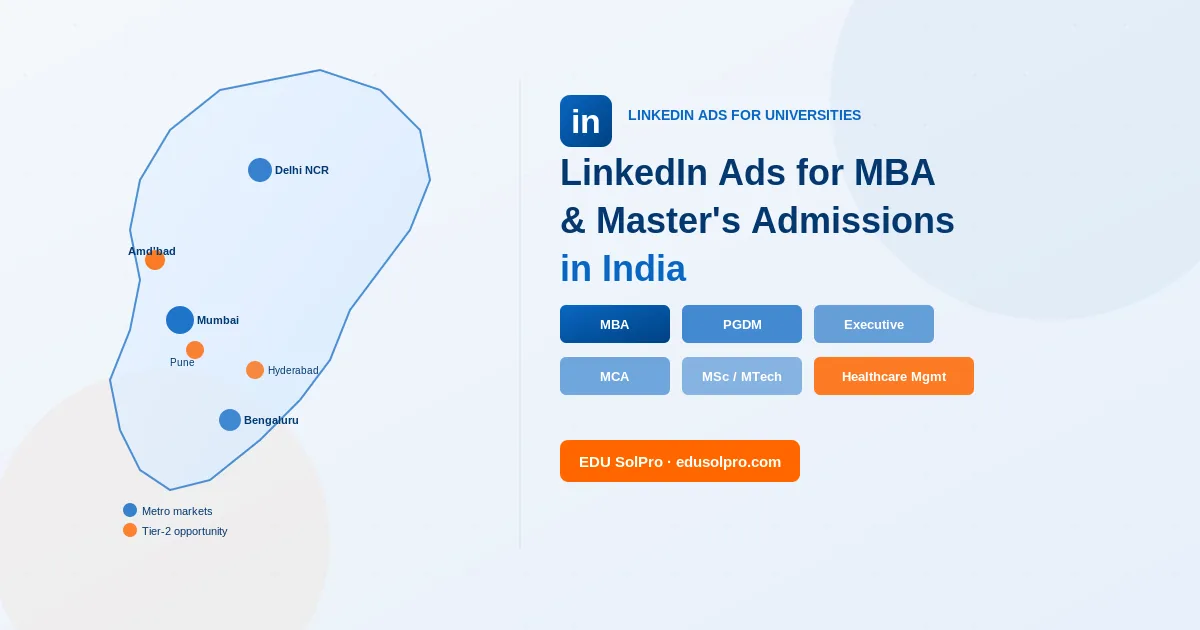
Can this work for postgraduate and executive programmes, not just UG? Yes, but the format and platform shift. For PG programmes, LinkedIn is more effective than Instagram. The creators are alumni speaking about career outcomes and the value of the programme to their professional development — not current students talking about campus life. For executive programmes, the peer testimony format works through webinars, podcasts, and LinkedIn posts rather than short-form video.
How long does it take to see admissions impact from a creator programme? Inquiry attribution typically becomes visible within 6–8 weeks of consistent content output. Application impact — a more delayed signal — is usually measurable within one admissions cycle. The programmes that show the strongest results are those that run consistently for 12+ months rather than treating it as a campaign with a defined end date.